Von einem wertvollen Centstück und dem Scherflein der armen Frau

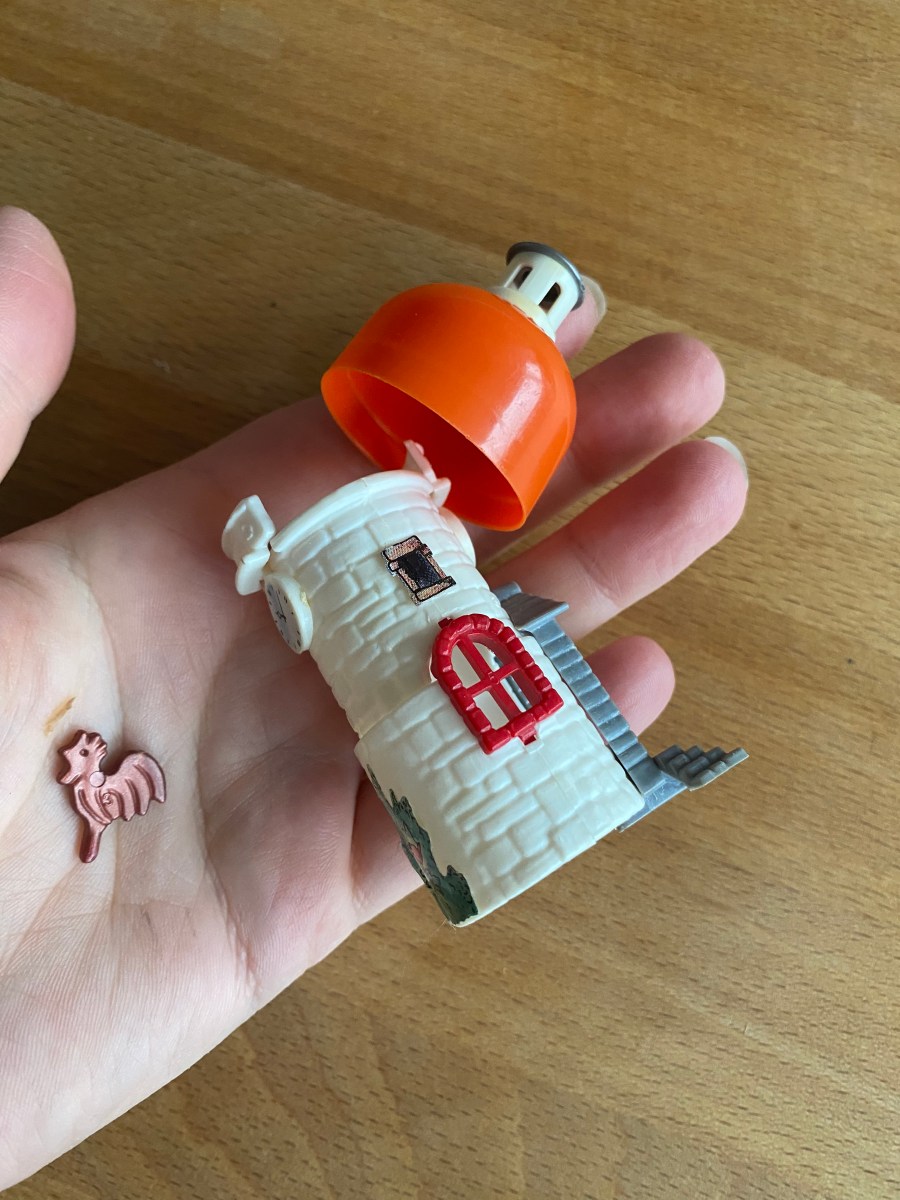
Hektisch hatte ich die Taschen meiner Winterjacke, dann meiner Lieblings-Fleecejacke durchsucht. Doch nirgends war das Centstück zu finden. Ich schüttelte leise vor mich hinmurmelnd den Kopf und dachte nochmals scharf nach als mir plötzlich die Idee kam, in meiner Jeanshose nachzusehen. Ich griff in die rechte Hosentasche der in die Jahre gekommenen Jeans und spürte das kühle, kleine runde Glatt der Münze in meiner Hand. Ein tiefer Seufzer der Erleichterung entwich mir. Endlich hatte ich das Centstück wieder gefunden.

Während ich die glänzende Münze in meiner Hand hin und her drehte, musste ich an die liebe Kundin denken, die mir diese vor einigen Wochen geschenkt hatte. Über die Kuchentheke der Tafel hinweg hatte sie mir freudestrahlend ein mit Centstücken gefülltes Glas hingehalten. „Ich habe Ihnen etwas mitgebracht! Nehmen Sie als kleines Geschenk einen Cent heraus. Der soll Ihnen Glück bringen und Sie an mich erinnern. Durch Ihre Arbeit hier bei der Tafel helfen Sie mir und meiner Familie über die Runden zu kommen.“ Ich schluckte schwer während ich spürte, wie meine Augen sich mit Tränen füllten. Daher griff ich schnell in das Glas und lies das Centstück in die rechte Hosentasche meiner Jeans verschwinden. „Herzlichen Dank! Der Cent wird mich immer an Sie erinnern. … Was kann ich heute Gutes für Sie tun? … Wie immer etwas mit Schokolade für Ihre Kinder?“ Die Frau strahlte zurück und nickte während ich ihr ein schokoladiges Kuchenpaket zusammenstellte.

Das Centstück wurde ab diesem Tag zu einem wertvollen Erinnerungsstück an eine besondere Frau, die unverschuldet in eine schwere Notlage geraten war und ihre Familie mit der Hilfe der Bamberger Tafel über die Runden brachte. An diesem Nachmittag war ich sehr erleichtert, die wertvolle Münze wieder in meinen Händen zu halten.

Immer wieder erinnert mich das besondere Geschenk an die biblische Geschichte, die als „Das Scherflein der Witwe“ bezeichnet wird:

Und er [Jesus] lehrte sie und sprach: Seht euch vor vor den Schriftgelehrten, die gern in langen Gewändern umhergehen und sich auf dem Markt grüßen lassen und sitzen gern obenan in den Synagogen und beim Gastmahl; sie fressen die Häuser der Witwen und verrichten zum Schein lange Gebete. Die werden ein umso härteres Urteil empfangen.

Und Jesus setzte sich dem Gotteskasten gegenüber und sah zu, wie das Volk Geld einlegte in den Gotteskasten. Und viele Reiche legten viel ein. Und es kam eine arme Witwe und legte zwei Scherflein ein; das ist ein Heller. Und er rief seine Jünger zu sich und sprach zu ihnen: Wahrlich, ich sage euch: Diese arme Witwe hat mehr in den Gotteskasten gelegt als alle, die etwas eingelegt haben. Denn sie haben alle von ihrem Überfluss eingelegt; diese aber hat von ihrer Armut ihre ganze Habe eingelegt, alles, was sie zum Leben hatte.

Mk 12,38-44

Das Wort „Scherf“ oder Mittelhochdeutsch „scherben“, „scharben“, „einschneiden“ ist mit der dem Begriff der Scherbe verwandt. Früher hatten Silberpfennige Sollbruchstellen, damit sie für kleinere Werte geteilt werden konnten. Nach dem Brechen wurden sie als „Scherben“ bezeichnet. (1) Das Scherflein ist die Verkleinerungsform von Scherf. Martin Luther hatte in seiner Übersetzung von Mk 12,42 das Wort mit „Scherflein“ wiedergegeben und damit einen kleinen, aber anerkennenswerten Beitrag zum Ausdruck bringen wollen.

Die junge Familienfrau hatte mich durch ihr kleines Geschenk reich beschenkt, denn trotz ihrer Armut und Angewiesenheit auf Hilfe wie die der Tafel gab sie uns Helferinnen und Helfern von Herzen etwas von ihrem wenigen Hab und Gut. Dies mag nominell wenig sein, aber wie wir aus der biblischen Geschichte erfahren, ist es ungemein mehr als das einer reichen Person, die in Überfluss lebt.

Seit diesem Tag ist mir das kleine Centstück zu einer wichtigen Erinnerung und einem Ansporn geworden, den Segen, den Gott so vielfältig in mein Leben legt, mit anderen zu teilen, die im wahrsten Sinn des Wortes jeden Cent umdrehen müssen, um über die Runden zu kommen.


(1) Siehe: Kluge. Etymologisches Wörterbuch der deutschen Sprache. Bearbeitet von Elmar Seebold. 25., durchgesehene und erweiterte Auflage. De Gruyter, Berlin/Boston 2001; Etymologisches Wörterbuch des Deutschen. Erarbeitet unter der Leitung von Wolfgang Pfeifer. 2., durchgesehene, verbesserte und ergänzte Auflage. Akademie, Berlin 1993; unter Scherflein.

My dear Jewish friend 7: Shabbat Shira, the New Year of the Trees and songs of praise

After riding with my bicycle through a cold starry January evening to the local synagogue in Bamberg, I thankfully entered the warm and cozy building. Rabbi Dr. Almekias-Siegl had invited me for the Shabbat service and the following festive evening of Tu B´Shvat. As I sat down in a pew, my cold and stiff limbs started to thaw with every word spoken and every song rising.

When Rabbi Dr. Almekias-Siegl explained in his sermon that this evening was Shabbat Shira, my thoughts immediately traveled across the miles to your synagogue and Rabbi Shira Milgrom. My heart silently began to sing as I was reminded of you. What a coincidence to be invited on Shabbat Shira to this synagogue. I suddenly understood why the Rabbi had pointed out to others that my first name was Miriam (as you know in Germany you usually call each other by the surname). It never occurred to me that the names „Shira“ and „Miriam“ are closely intertwined in such significant ways. This special Shabbat not only flabbergasted me, but helped me to understand more about our shared commitment. Shabbat Shira emphasises the Song of the Sea and the Miriams song, which has always has been near to my heart. It is one of the greatest songs of the Torah:

I will sing to the LORD, for he has triumphed gloriously;

horse and rider he has thrown into the sea.

The LORD is my strength and my might,

and he has become my salvation;

this is my God, and I will praise him,

my father’s God, and I will exalt him.

The LORD is a warrior;

the LORD is his name.

“Pharaoh’s chariots and his army he cast into the sea;

his picked officers were sunk in the Red Sea.

The floods covered them;

they went down into the depths like a stone.

Your right hand, O LORD, glorious in power—

your right hand, O LORD, shattered the enemy.

In the greatness of your majesty you overthrew your adversaries;

you sent out your fury, it consumed them like stubble.

At the blast of your nostrils the waters piled up,

the floods stood up in a heap;

the deeps congealed in the heart of the sea.

The enemy said, ‘I will pursue, I will overtake,

I will divide the spoil, my desire shall have its fill of them.

I will draw my sword, my hand shall destroy them.’

You blew with your wind, the sea covered them;

they sank like lead in the mighty waters.

Who is like you, O LORD, among the gods?

Who is like you, majestic in holiness,

awesome in splendor, doing wonders?

You stretched out your right hand,

the earth swallowed them.

In your steadfast love you led the people whom you redeemed;

you guided them by your strength to your holy abode.

The peoples heard, they trembled;

pangs seized the inhabitants of Philistia.

Then the chiefs of Edom were dismayed;

trembling seized the leaders of Moab;

all the inhabitants of Canaan melted away.

Terror and dread fell upon them;

by the might of your arm, they became still as a stone

until your people, O LORD, passed by,

until the people whom you acquired passed by.

You brought them in and planted them on the mountain of your own possession,

the place, O LORD, that you made your abode,

the sanctuary, O LORD, that your hands have established.

The LORD willI will sing to the LORD, for he has triumphed gloriously;

horse and rider he has thrown into the sea.

The LORD is my strength and my might,

and he has become my salvation;

this is my God, and I will praise him,

my father’s God, and I will exalt him.

The LORD is a warrior;

the LORD is his name.

“Pharaoh’s chariots and his army he cast into the sea;

his picked officers were sunk in the Red Sea.

The floods covered them;

they went down into the depths like a stone.

Your right hand, O LORD, glorious in power—

your right hand, O LORD, shattered the enemy.

In the greatness of your majesty you overthrew your adversaries;

you sent out your fury, it consumed them like stubble.

At the blast of your nostrils the waters piled up,

the floods stood up in a heap;

the deeps congealed in the heart of the sea.

The enemy said, ‘I will pursue, I will overtake,

I will divide the spoil, my desire shall have its fill of them.

I will draw my sword, my hand shall destroy them.’

You blew with your wind, the sea covered them;

they sank like lead in the mighty waters.

Who is like you, O LORD, among the gods?

Who is like you, majestic in holiness,

awesome in splendor, doing wonders?

You stretched out your right hand,

the earth swallowed them.

In your steadfast love you led the people whom you redeemed;

you guided them by your strength to your holy abode.

The peoples heard, they trembled;

pangs seized the inhabitants of Philistia.

Then the chiefs of Edom were dismayed;

trembling seized the leaders of Moab;

all the inhabitants of Canaan melted away.

Terror and dread fell upon them;

by the might of your arm, they became still as a stone

until your people, O LORD, passed by,

until the people whom you acquired passed by.

You brought them in and planted them on the mountain of your own possession,

the place, O LORD, that you made your abode,

the sanctuary, O LORD, that your hands have established.

The LORD will reign forever and ever. reign forever and ever.

Exodus 15:1-18

It is the song of the people of Israel at the Red Sea, when your people were saved from the pharaoh through G´d. Being named after biblical Miriam, I was always drawn to the story of the exodus. Many a times I shivered about the pressure, toil and hardship Israel had to bear in Egypt, the plagues, and the miracles Moses performed through G´d.

For me as a Lutheran pastor committed to seeking peace and justice, this story is a symbol of triumph after difficult times and that G´ds promise of justice and freedom can be reached. Many times it takes the struggles of numerous generations until justice becomes reality.

But how quickly do we get used to a peaceful and just surrounding? You and I, we both had the privilege to grow up in peaceful times. Through the history of our nations, which are intertwined through the murderous crimes of the Holocaust, we should remember with huge thankfulness that we are blessed with peace.

The nearness of Tu B´Shvat on this Shabbat may help us to remember that the Creator has provided us with everything we need. The New Year of the trees celebrates the fruit of the tree, the vegetables, the plants that give air to the world and so much more. As the Rabbi shared his memories of celebrating „the New Year of the Trees“ in Israel I could feel the joy spreading in the small diaspora synagogue and once more my longing to visit Israel has been awakened again. (I truly hope to be able to spend time there as soon as this pandemic is over.) As we entered the small communal space on the ground floor, a beautiful meal was prepared for us with more fruits than we could eat and we indulged in fruits, which came from your homeland Israel.

As I ate the carefully selected and beautifully presented fruits, I had to think of all the blessings laid into my life. I don’t have to worry about food or a roof over my head, and am blessed in so many ways. But how often do we forget that the basic things in life are small wonders in themselves? Working in your pantry, getting to know your synagogue, and experiencing how quickly even basic things like food can be taken from you, have changed my perspective both on the song of Miriam and the basic things in life.

I think it is our challenge, to recognise the everyday gifts received from above, and to share these blessings with those, who are less fortunate than us. For them they are wonders and free those, who are less fortunate from their bondage hunger and economical troubles. May our actions become very practical, recognisable songs of Miriam as we use our hands, hearts, and lips to give praise to the one, who has called us to pursue peace and justice.

Zu Gast bei Initiative 27. Januar

Am Abend des Epiphanienfestes war ich zu Gast bei Initiative 27. Januar. Im neuen, modernen Talkformat bei Instagram durfte ich mit Herrn Matthias Böhning meine biografischen und theologischen Zugänge zu Friedens- und Versöhnungsarbeit, Rassismus und Antisemitismus in Übersee und Deutschland sprechen. Es war eine spannende Unterhaltung, die mir sehr viel Spaß gemacht hat. Ich danke Herrn Böhning sehr für diese Einladung und lege die Initiative allen Leserinnen und Lesern ans Herz! Mitmachen könnt ihr bereits jetzt ganz konkret durch die Unterstützung des Projekts „Weiße Rosen und Briefe für Holocaustüberlebende“ (Link).

Hier ist der Zugang zum Video, der auf IGTV gepostet wurde:

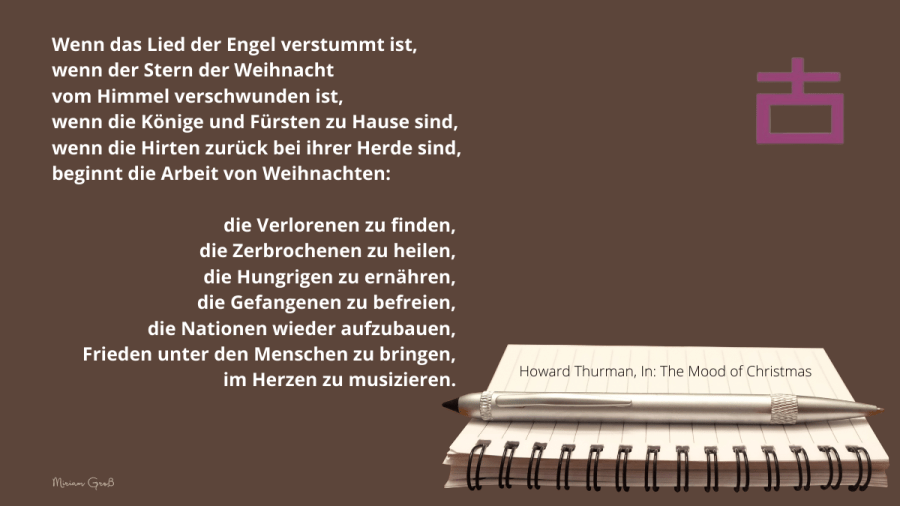
Wenn das Lied der Engel verstummt…

Wehmütig betrachtete ich unsere Krippe. Wie in unserer Familie üblich, würde die Weihnachtsdekoration am Nachmittag des Epiphaniasfestes wieder für viele Monate in Boxen verstaut und dort auf das nächste Geburtsfest Jesu Christi warten. Ich seufzte und löschte das Licht des kleinen Herrnhuter Sterns, der neben einem prächtigen Engel den Hirten geschienen und ihre Arbeit in der sonst finsteren Umgebung erhellt hatte.

Was blieb damals als das Lied der Engel verstummt und der Stern der Weihnacht erloschen war? Mein Blick schweifte weiter über die noch hell erleuchtete Krippe und blieb am kleinen, neugeborenen Kind hängen. Als Mutter von vier Kindern wusste ich sehr genau, dass mit der Geburt die Arbeit noch nicht vorbei war. Im Gegenteil: Sie begann dann erst recht mit der Sorge um ein Kind, das Gott uns anvertraut hatte.

Der US-amerikanische afro-amerikanische Theologe Howard Thurman fasste die Arbeit, die uns mit dem Christfest als Gläubige aufgetragen worden war, in seinem Gedicht „The Work of Christmas“ in sehr treffliche Worte:

When the song of the angels is stilled,
when the star in the sky is gone,
when the kings and princes are home,
when the shepherds are back with their flocks,
the work of Christmas begins:
to find the lost,
to heal the broken,
to feed the hungry,
to release the prisoner,
to rebuild the nations,
to bring peace among the people,
to make music in the heart.

Howard Thurman, The Mood of Christmas & Other Celebrations, p. 28.

Als Christinnen und Christen beginnt für uns mit dem Abklingen des Weihnachtsfestes die Arbeit für die uns Gott vorgesehen hat – nämlich sein Friedensreich in dieser Welt immer ein Stückchen mehr Realität werden zu lassen durch unsere Handlungen, Worte, große und kleine Gesten. Nach einer festlichen Zeit können wir nun gestärkt und ermutigt ans Werk gehen.

Packen wir es an! Es gibt viel zu tun!

Jahresabschluss, steinerne Rinnen und weise Worte aus Übersee

Das klare Wasser gurgelte eine sanfte Melodie, die vom magischen Rhythmus der Natur angetrieben ein niemals endendes Lied der Schöpferkraft Gottes vor sich hin sang. Gebannt hatte ich mich vorsichtig über das steinerne Naturwunder gebeugt und beobachtete Faszination den Lauf des frischen Wassers, dessen Weg von einer moosbewachsenen Rinne geführt sanft den Berg hinabführte.

Es tat gut, an diesem letzten Tag des Jahres 2021 einen Familienausflug an diesen besonderen Ort zu machen. Ein turbulentes, von vielen Veränderungen, Erschütterungen und kulturellen Wechseln geprägtes Jahr lag nun fast hinter uns. Ich seufzte still und atmete die klare Waldluft ein während das sanfte Gurgeln des Wassers mein Herz, das durchaus aufgrund der Veränderung in große Unruhe im letzten Jahr geraten war, mit wohltuender im Moment liegender Stille erfüllte.

Über einen angenehmen, leichten Wanderweg erreichten wir innerhalb von ca. 20 min die steinerne Rinne bei Roschlaub, Gemeinde Scheßlitz. Schon lange hatte ich mir gewünscht, dieses Naturschauspiel zu besuchen. Durch die Ausfällung von Kalziumkarbonat entsteht das quellnahe Hochbett eines Baches in Karstlandschaften. Die steinerne Rinne bei Roschlaub wächst im Jahr 2-3 mm. Wie wunderbar, dass ein solches Naturwunder nun weniger als eine halbe Stunde Autofahrt von uns entfernt war.

Gebannt sah ich zu, wie Blätter und kleine Äste wie von Geisterhand bis zum Fuß der Rinne transportiert wurden und dort als Untergrund für das quellnahe Hochbett dienten. Ein wenig erinnerte mich dieser Naturvorgang an die Worte des Theologen Howard Thurman (1899-1981), der als Nachfahre afro-amerikanischer Sklaven in den damals von Rassentrennung dominierten Südstaaten Amerikas aufgewachsen war. Er wusste aufgrund der der Geschichte seiner Familie und seiner eigenen Lebensgeschichte in einer von Rassentrennung geprägten USA, wie schwer das Leben spielen und Erfahrungen eine Person prägen konnte. Was ihn aber auszeichnete und sehr dem Mechanismus der Rinne ähnelte, war der Umgang mit schweren Erfahrungen:

We can use our memory of the past with creative discrimination. We can lift out of the past those things what will give us reinforcement as we face the future, that will give us courage, that will lift the ceiling of our hopes as we look toward the tomorrow. Because of what we have learned form this aspect of our past, we are reinforced for the future. We can thereby let the past become something more than history: something that tutors us as we move into the new year. Now that we know this, we may heal ourselves in the light of this judgement. The past is history but the past is alive, because the past is in us.

Howard Thurman, The Mood of Christmas & other celebrations, p. 181.

Wie die steinerne Rinne Blätter, kleine Äste und Kalziumkarbonat für ihr Wachstum nutzt, anstatt an ihnen zugrunde zu gehen, so können wir die Erfahrungen unseres Lebens nutzen. Es ist unsere Entscheidung, ob wir, wie Thurman schreibt, durch die schweren Geschehnisse unserer Vergangenheit uns dem Pessimismus zuwenden oder der schweren Vergangenheit mit einem kreativen Urteilsvermögen entgegentreten. Ein Urteilsvermögen, das aus dem Geschehen für die Zukunft lernt und dadurch Zukunft ermöglicht.

Ein wenig wie die steinerne Rinne, die ihre Herausforderung von Naturmaterial, Moos, Kalk und Wasser für das eigene Wachstum nutzt.

Liebe Leserin, lieber Leser, ich wünsche euch die Zuversicht und den Mut Howard Thurmans. Mögen die Erfahrungen des Jahres 2021 und die weiterer Jahre euch zum Segen werden, damit ihr einer hoffnungsvollen Zukunft gestärkt durch eure Erfahrungen in 2022 und darüber hinaus entgegen wachsen könnt.

My dear Jewish friend 6: Shalom and Shared Roots of Faith

When entering our apartment, my hand softly touched the Hebrew letters of שלום. Shalom. Peace. Frieden. I sighed deeply as the well-known words of the Shema Israel came over my lips. Protected by a beautiful bright blue outside the small parchment scroll of the Mezuzah contained important parts of the Holy Scriptures (1) and was a precious memory of seven years in New York.

Hear, O Israel: The LORD is our God, the LORD alone. You shall love the LORD your God with all your heart, and with all your soul, and with all your might.

Deut 6,4-5

Shalom. Peace. Frieden.

Our world is struggling heavily to find peace. Despite a raging pandemic, a large portion of our world is still engulfed in different conflicts and wars. (2) What a terrible fact as Christianity is celebrating Christmastide and all nations are heading for the New Year!

Year after year I am hoping for peace to come. Even though you and I live in peaceful nations, many are not as fortunate. My own nation has not lived up to the basic religious principal engrained into Judaism and Christianity. During the Nazi dictatorship most Germans were official members of the Roman Catholic or Protestant Churches, but didn’t live up to the concept of shalom. Instead, they were eagerly part of a murderous, diabolical system. Large numbers did not simply forget the connections between Judaism and Christianity, but some very actively tried to destroy every trace of shared values.

When on a very cold night of November 9 the local Rabbi Dr. Salomon Almekias-Siegl came to our Christian home, it felt as if a tide of personal family history was turning in healing ways. It could have not been a more touching date for installing our Mezuzah at the apartment door of our German Christian family. On what is today known as „Kristallnacht“ (3), from November 9 to 10, 1938 when synagogues and Jewish property were burned and destroyed on a large scale, and hundreds Jews were killed or driven to commit suicide, it was this gesture of שלום that deeply moved us.

After checking that the small scroll was kosher, the Rabbi spoke the blessing hanging the mezuzah slanted on the right side of the door, facing inwards towards our apartment. My thoughts went to the biblical story of the Rabbi Jesus discussing religious matters with scribes where he referred to the Shema Israel and the commandment to love neighbour and self as the highest commandments of faith (Marc 12:28-31). If only the perpetrators of the Nazi dictatorship large and small would have lived up to this commandment instead of killing millions of Jews!

Now, day after day, as I pass through our door, the bright blue Mezuzah and its silver letters remind me that the way to שלום is adhering to these fundamental commandments, which bind Judaism and Christianity together. I am so thankful for this reminder, which was installed on one a night that reminds us of one of the darkest night in German history.

Shalom. Peace. Frieden.

With every new day rising and every passing through our doorway my hope grows that God´s kingdom will grow in our broken world by love we show God and our neighbour.


(1) Deuteronomy 6:4-9 and 11:13-21.

(2) Statista:

(3) The Night of Broken Glass

My dear Jewish friend 5: United against hunger

It took me months, my dear Jewish friend, to have the courage to look for a new commitment to fight against hunger. My heart and hands were dreaming about our shared fight against hunger. You have taken me in as a Christian into your beautiful Jewish pantry – and you have changed my life forever. Your leadership has showed one German pastor and her family how reconciliation makes its way into hearts and lives through the shared care for those less fortunate.

As I missed you and the community of Kohl Ami week after week it was a Jewish story about the Lithuanian Rabbi Haim Romshishker that became important to me. It emphasises how important compassion for the poor is. A value we as Christians and Jews share. This compassion may be the decisive moment one feels like being in heaven or hell:

„Once, I went up into the sky and also entered hell. I looked around and saw: old and young men sitting rows upon rows in front of tables that were full of all the best things, each holding a long spoon in hand. And when one reached for his mouth, he wouldn’t be able to because of the spoon’s length. And so they all sat row against row with their souls dry and a great sorrow rested on their faces. I went over to one of them and said to him: „A fool in the world! Rather your eyes seeing all this goodness and craving, send the spoon that is attached to your hand and support your friend who sits opposite you. And he will, in turn, support you with the spoon attached to his hand.“

The man looked at me with meager eyes and replied:

„It would better for my eyes to see and crave all day long than for me to see him enjoy and be satiated.“ I was alarmed to hear this, so I opened my mouth to scream a loud scream and woke up.

(Alter Druyanov (1870-1938): Sefer habedichah vehachidud 1935, 2. Buch, Abschnitt betitelt mit „bein adam l’chavero“)

Dear Jewish friend, I was so blessed that we shared what we had in these dense pandemic months in New York and fed those, who were less fortunate than we were. We rejoiced in having fed some of the poor. It took me weeks to let go of what we had and make these moments precious memories. I will forever carry them in my heart.

A few weeks ago I took my courage together to seek a pantry in my new German home town. Even though Germany has a robust social system there are so many, there is plenty of hunger and need. So I am now honouring our friendship by giving out bakery on Saturday noon to those less fortunate.

Here are a few images from the pantry – I am sure you’ll recognise the tichel, I often wore at your pantry.

Ein Mensch sieht was vor Augen ist… Von biblischen Lehren im Aufzug

Ich betrat den Aufzug und drückte auf den Schließknopf, da ich allein war. Doch anstatt, dass sich die Türen schlossen, gingen sie immer wieder auf. Ich schüttelte verwirrt den Kopf. Nachdem sich das Spiel drei Mal wiederholt hatten, erlaubte ich mir den Scherz und drückte auf den Türöffnungsknopf. Und tatsächlich: Wie von magischer Hand schlossen sich die Türen und der Aufzug machte sich beende auf den Weg in das nächste Stockwerk. Schmunzelnd schüttelte ich den Kopf und erinnerte mich an einen meiner liebsten biblischen Verse aus dem ersten Samuelbuch. Dieser Aufzug schien es mit biblischen Lehren in sich zu haben!

Ein Mensch sieht, was vor Augen ist; der HERR aber sieht das Herz an.

1. Sam 16, 7b

Wie oft lassen wir uns vom Äußeren, der Kleidung, dem Auftreten einer Person beeinflussen und fällen unser Urteil über den Wert dieser Person? Die biblische Geschichte der Salbung des Davids macht dabei sehr nachdenklich. Sie lehrt uns anhand des berühmten, erfahrenen Propheten Samuel, dass sich Menschen schnell von Äußerem leiten und vielleicht sogar täuschen lassen. Gott hatte Samuel zu Isai gesandt, damit er unter dessen Söhnen den neuen König auswählen würde. Sieben Söhne gingen an ihm vorüber und bei jedem dachte Samuel, dass dies der neue König Israels sei. Ausgewählt hatte Gott aber den Jüngsten unter ihnen, der all das Aufsehen rund um die Suche eines neuen Königs verpasste und stattdessen auf dem Feld die Schafe für die Familie hütete. Ihn sollte Samuel schließlich zum König salben. (1)

Nicht selten kamen über die Jahre Konfirmandinnen und Konfirmanden, Schülerinnen und Schüler zu mir mit ihrer Verzweiflung, dass sie aufgrund ihres Alters, aber oftmals auch aufgrund ihrer fehlenden Markenkleidung als weniger wert angesehen würden. Die Salbungsgeschichte Davids kann dann eine Hoffnungsgeschichte bei einer solch schwierigen Erfahrung sein. Welch ein Segen, dass Gott tiefer blickt und sich nicht von Äußerem blenden lässt. Er sieht wie es wirklich um uns und unser Herz steht.

Ob die Aufzugsfirma beim Einbau wusste, dass einmal eine Theologin diesen Aufzug benutzen und regelmäßig zum Schmunzeln gebracht werden würde? Seit dieser biblischen Lehre im Aufzug erinnert mich jede Fahrt, an der ich die verwechselten Knöpfe drücke daran, dass wir Menschen sehen, was vor Augen ist, aber Gott tiefer sieht bis in unser Herz und wie es um uns wirklich steht.


(1)

Und der HERR sprach zu Samuel: Wie lange trägst du Leid um Saul, den ich verworfen habe, dass er nicht mehr König sei über Israel? Fülle dein Horn mit Öl und geh hin: Ich will dich senden zu dem Bethlehemiter Isai; denn unter seinen Söhnen hab ich mir einen zum König ersehen. Samuel aber sprach: Wie kann ich hingehen? Saul wird’s erfahren und mich töten. Der HERR sprach: Nimm eine junge Kuh mit dir und sprich: Ich bin gekommen, dem HERRN zu opfern. Und du sollst Isai zum Opfer laden. Da will ich dich wissen lassen, was du tun sollst, dass du mir den salbst, den ich dir nennen werde.
Samuel tat, wie ihm der HERR gesagt hatte, und kam nach Bethlehem. Da entsetzten sich die Ältesten der Stadt und gingen ihm entgegen und sprachen: Bedeutet dein Kommen Friede? Er sprach: Ja, Friede! Ich bin gekommen, dem HERRN zu opfern; heiligt euch und kommt mit mir zum Opfer. Und er heiligte den Isai und seine Söhne und lud sie zum Opfer.
Als sie nun kamen, sah er den Eliab an und dachte: Fürwahr, da steht vor dem HERRN sein Gesalbter. Aber der HERR sprach zu Samuel: Sieh nicht an sein Aussehen und seinen hohen Wuchs; ich habe ihn verworfen. Denn es ist nicht so, wie ein Mensch es sieht: Ein Mensch sieht, was vor Augen ist; der HERR aber sieht das Herz an. Da rief Isai den Abinadab und ließ ihn an Samuel vorübergehen. Und er sprach: Auch diesen hat der HERR nicht erwählt. Da ließ Isai vorübergehen Schamma. Er aber sprach: Auch diesen hat der HERR nicht erwählt. So ließ Isai seine sieben Söhne an Samuel vorübergehen; aber Samuel sprach zu Isai: Der HERR hat keinen von ihnen erwählt.
Und Samuel sprach zu Isai: Sind das die Knaben alle? Er aber sprach: Es ist noch übrig der jüngste; und siehe, er hütet die Schafe. Da sprach Samuel zu Isai: Sende hin und lass ihn holen; denn wir werden uns nicht niedersetzen, bis er hierhergekommen ist. Da sandte er hin und ließ ihn holen. Und er war bräunlich, mit schönen Augen und von guter Gestalt. Und der HERR sprach: Auf, salbe ihn, denn der ist’s. Da nahm Samuel sein Ölhorn und salbte ihn mitten unter seinen Brüdern. Und der Geist des HERRN geriet über David von dem Tag an und weiterhin. Samuel aber machte sich auf und ging nach Rama.

  1. Sam 16,1-13

My dear Jewish friend 4: The Franconian newspaper connection

Saturday morning rush. I was standing in line for the cash register. With people only slowly moving forward, I glanced through the newspaper shelf right next to me. There were different German newspapers pilled up reaching from local papers like the „Fränkischer Tag“, „Süddeutsche Zeitung“ having an emphasis on the south of Bavaria, and even international ones. „The New York Times“ brought a smile to my face. This newspaper was of such importance to me as I lived and worked as a German pastor in New York. You, my dear Jewish friend, are a vivid newspaper reader yourself. And I remember us discussing politics, news and happenings with one another. But did you know, that The New York Times has Franconian roots? Without a courageous and visionary descendant of a Franconian Jew, who emigrated to the United States, both of us wouldn’t have had this great and fearless news source.

Adolph S. Ochs, American newspaper publisher and former owner of The New York Times, was a descendant of Franconians. His father Julius migrated from Fürth in 1844 at the age of 18 to the USA and settled in Cincinnati, Ohio. Adolph Simon Ochs was the oldest of six siblings. At the age of eleven he started to earn money as a newsboy, pursued a printer apprenticeship and bought The New York Times in 1896 at the age of 38 before the paper went bankrupt. The rest is history. Up to today The New York Times sets the highest standards for investigative, critical, and independent journalism. (1)

No wonder that you and I, my dear Jewish friend, were so perfectly informed through the rough year of 2020, where a pandemic, an up cry against Racism and Antisemitism, economic difficulties, and a nation divided over elections made the ground beneath us shake. But we held on to each other and our deep hope for a better world as we were involved in תיקון עולם (Tikkun Olam). A paper diary, in which I kept the most important articles of The New York Times reminds me of this faithful year of 2020.

And so it came about many years and generations later during a year of hardship, doubts, and uncertanty that The New York Times was a lifeline for Christian pastor from Franconia living and working in New York. And this I can surely and wholeheartedly say: Adolph Ochs memory is for a blessing.


(1) Source: Verein zur Förderung des Jüdischen Museums Franken – Fürth, Schnaittach und Schwabach e.V., Vereinsmitteilungen Nr. 58, Juni 2021, S. 9.